Blog

A Magnificent Treasure!

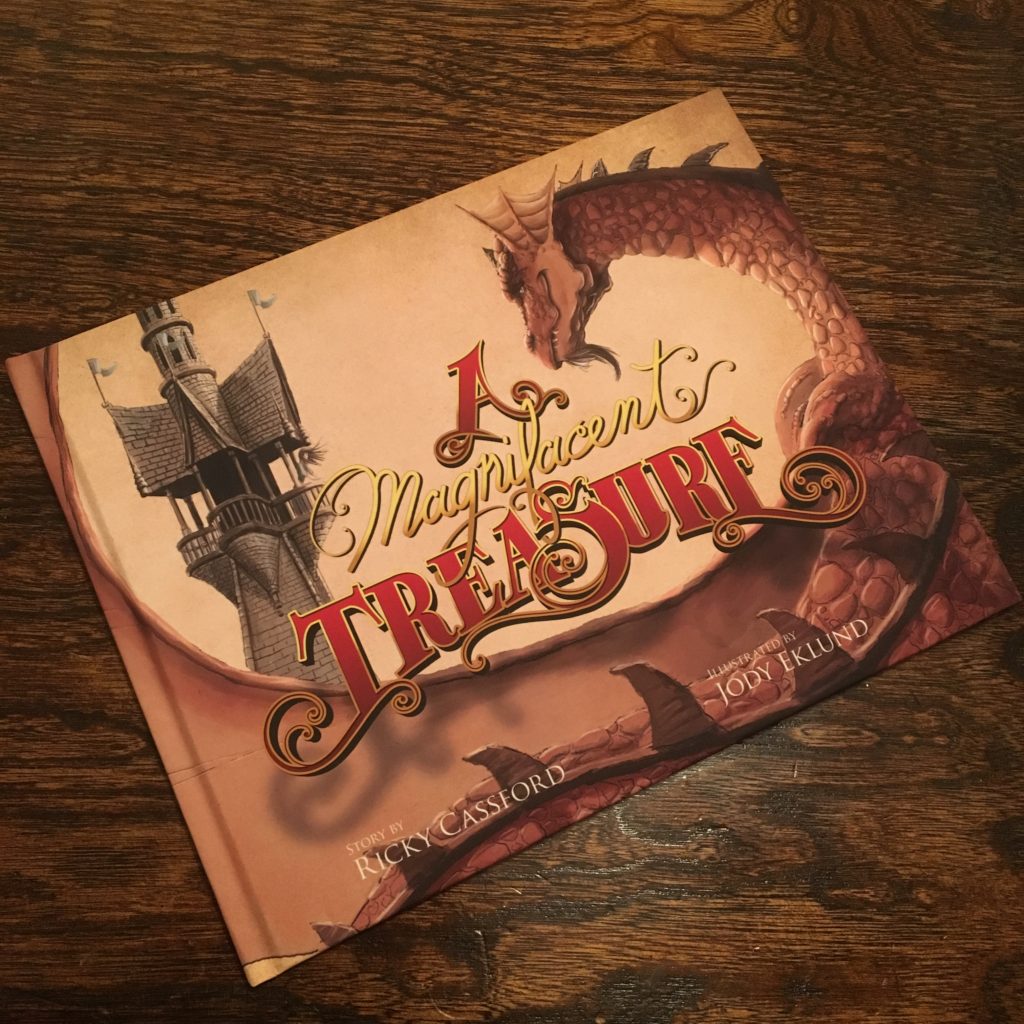
A Magnificent Treasure, by Ricky Cassford

Dragons are well known to be protectors. They are also known to possess the greatest treasure in the land. Tales have been told of dragons with maidens held captive in the tower of a castle, for centuries, but what if we reverse the idea? How about a maiden that is not held against her will, but feels protected, and taken care of, by the dragon? …who feels treasured by the dragon?

When I first had the inspiration to take a well known object, or animal, and personify my feelings for my girls upon this thing, I flippantly said to my pastor, “Wouldn’t it be cool to have a story that illustrates how a dad provides, and fiercely defends his daughter… like a dragon defending its treasure?”  He then said seven simple words that inspired a five year journey.

He said, “I love the way your mind works!”

I thought to myself, “Perhaps I should write that down.”  Well five years later, I have a published picture book, that a fellow artist friend of mine illustrated.

The day we uploaded the AMT files to the publisher.

A Magnificent Treasure, is a reorienting of a tale that involves a dragon, a maiden, and a knight, but this time the motivations have changed.  Dad, it’s time to enjoy the pleasure of reading to your daughter(s) in a new way, while endearing the idea of how much you value them into both of your hearts.  This concept changed my relationship with my daughters before I had even written it down!

My daughters call me their Dragon, and my girls are my Gem, and my Jewel respectively… and collectively they are my Treasure; my Magnificent Treasure!!

My Gem, and My Jewel

I will be reading this story to my girls – even at 11 and 15 – this weekend at Brave Church.  Come hear it from my lips, and buy a signed copy!

B.R.A.V.E. Church – Room 201 (10:30 am)
3651 S. Colorado Blvd
Englewood, CO 80113


*If you’re not in the area, you still can purchase a book on the resources page.  Or on amazon.com, A Magnificent Treasure

Let Them Fail – Big Deal Behavior (8 of 8)

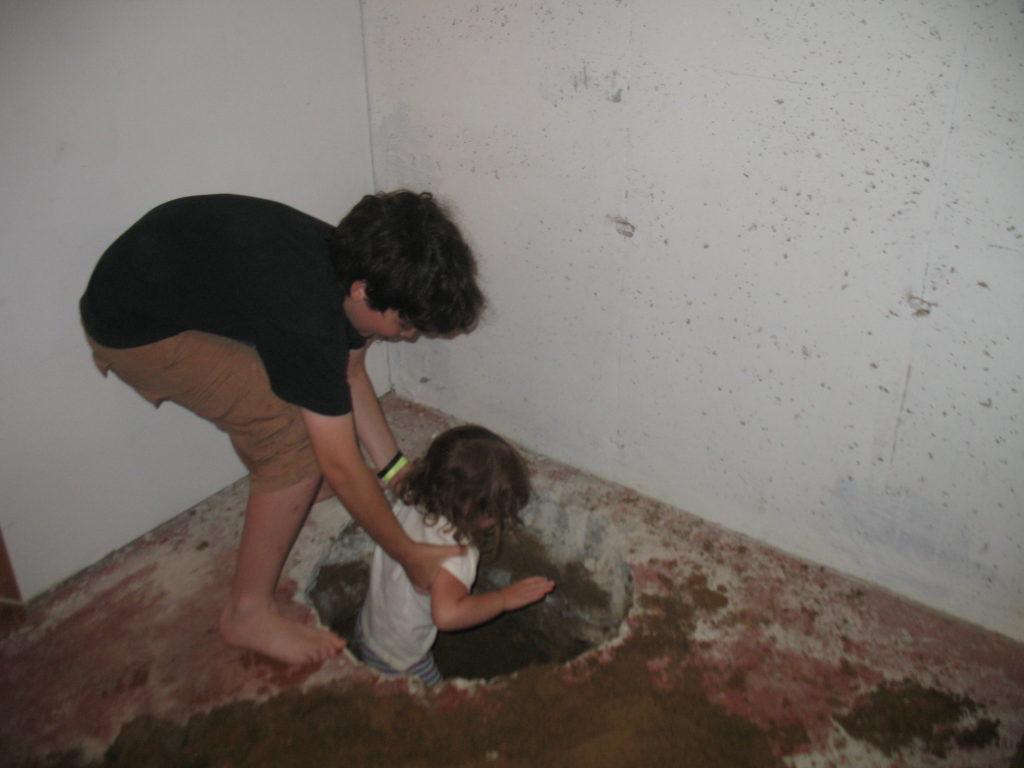
Climbing with Wesley!

“But if I don’t help him, he won’t be able to do it…”

Is that right? or is the truth, that if you help him he will subconsciously think that you don’t believe he can do it on his own?

I believe the question truly becomes, “is their need for help simply your perception? does it stem from your own need to help, so that you feel needed? or is it that they are truly incapable of accomplishing the given task with out you? You can make this call, but be honest with yourself about it.  Do you know them, or the situation, well enough to truly make the call on their ability to accomplish it?  Try to be at that place, before you determine whether or not to believe in their success or failure.

I’m talking about behavior, remember…

The reason I put a picture of us climbing a mountain is that I find we often understand the concept of discipline, and “try, try again” when it comes to exercise or adventure, but we forget that the brain learns skills the same way, whether it’s leaning the appropriate way to dribble a basketball, or learning the appropriate way to respect their mother.

BUT WHAT IF THEY FAIL?

Failure is often the best teacher, when love comes along side the failed child and helps them back to their feet to try again! This concept is true in so many areas of life. So, let them fail.

From a behavioral standpoint, when a child feels that they cannot fail without major repercussions it leads to an extremely stressful life.  I want to discourage you from holding such a high standard for behavior that your child(ren) don’t feel that they can make a single mistake.  We all make mistakes… so set expectations, but make sure they know that you love them no matter what.

I also want to encourage you to allow your child to fail, while it’s cheap.  It’s far easier on your pocket-book for your child to brake a window, than to crash the car.  Though those two may not seem related, when the disobedience of a child causes both, the root problem is the same.  It’s also easier to physically require obedience of a 4-year-old than a 14-year-old… just sayin’.   So, start now!  Not only is it easier on you emotionally when you are less invested in the object of their destruction, but if they grow up with an understanding of your love for them, even if they fail, they will strive to succeed for you far more!

They both did it!

It’s true with hiking, rock climbing, as well as learning life lessons.  Don’t save your child(ren) from the consequences of their actions. Let your child fail, pick them back up, discipline them if necessary (or allow the natural consequences to be felt), and allow them to try again.  The way we learn to walk, run, climb etc. is from understanding what causes us to falter, then avoiding those steps the next time. The only difference on the behavior front, is that sometimes it is necessary for you, as dad, to bring to their attention the falter.

Vocabulary Words – Big Deal Behavior (7 of 8)


Lucy, age 4

“Now, I expect your assimilation concerning my regulatory statutes, and that you understand their pertinence according to what we have deemed acceptable in any singular situation.”

(For child’s response see picture above.)

We often think about adjusting our vocabulary for the sake of a child that doesn’t understand all the words we may use as adults.  However, I want to caution you from changing the concept of what the child really needs to hear from you in the process.

The way you use words is important, especially words spoken with sincerity, but don’t devalue the sincerity when/if you choose to change the vocabulary that you use.  Remember the way you say things communicates more than Webster’s definition.

Now, you may say my child’s vocabulary isn’t developed yet so they won’t know what the words mean (“…and I don’t even know what “edify” means, which illustrates my objection…!”) The words you use, can build up (which is what edify means), or tear down. The hard part is there are more words, in common language, that can tear down than there are that build up so we must be intentional.  …and yes, there is a reason I’m ‘making a big deal’ about vocabulary.

Think about it this way, you don’t ever think twice about telling a 16-month-old baby girl that she is pretty, and you can see it in her face that she understands. It works with boys too. Words like honor, courage, respect, and maturity are words that seem to soak in through the skin, even without a complete understanding of what the definitions of these words say.

Photo by Aaron Burden

KIDS ARE SMART
I have had many conversations with youth leaders, teachers, and parents who “talk down” to the kids, or use the term “dumb-it-down” when they are teaching certain material. As much as kids are captured by colors and sounds, because of developing mental expression, don’t miss that kids are smart!!! In fact, arguably smarter than you, from an interval of learning standpoint. In a traditional relationship with, healthy people on both, sides the only difference between your intelligence level and your child’s, is experience and vocabulary! Don’t talk down to them, just talk to them.

You don’t have to be someone you’re not to do this, right now.

Laying this foundation is huge when they are toddlers, but it becomes important as they get into the elementary years, and vital as they become “Tweeners.”  The way you say your words will not only convey the message you are intending, but it will teach them vocabulary too.  It will take the focus off of your relationship and put it on their behavior where it belongs.

When you speak of seeking to honor and respect your son, but his behavior is the problem, your relationship maintains its integrity and doesn’t become the issue. Tell them what you are seeking in them (honor/respect/maturity), and how their behavior seems to be getting in the way of that and then ask them if they can explain why that might be? and ask them, how do we fix this?

These tools are valuable, because your child(ren) will make mistakes! This is the reason why God gave them parents, and specifically why God gave them you!

The apostle Paul reminds us of a truth that works for your children, as well as your contemporaries:

Romans 15:1-2, “We who are strong have an obligation to bear with the failings of the weak, and not to please ourselves. Let each of us please his neighbor for his good, to build him up.” (*edify him 😉 )

Using When They’re Right, When their Wrong – Big Deal Behavior (6 of 8)

Photo by NeONBRAND

There was a great amount of time, in the elementary years of my children, that I simply was at a loss of how to train certain elements of my children’s character.  When you get passed the early development: demonstration and instruction, there comes a time when you start desiring more complex concepts like wanting them to be responsible and diligent …but “how do I train that?” I wondered.

I happened upon the idea of using both concepts: “when they are right” to influence “when they’re wrong.”  We’ve discussed the components separately, and in the last post, Doing the Motions, I briefly touched on using the following technique, but I thought I would outline the entire process for you – not as a recipe for specific times in your children’s lives, but as a pattern by which to parent.

OUTLINE:
USING “WHEN THEY’RE RIGHT, WHEN THEY’RE WRONG”
The following is a simple outline that can help you use this technique:

When They’re Right

  1. Make a big deal over how proud you are, and what a good job they did
  2. Specifically point out which pieces of your code of conduct, or character training system they have used
  3. Specifically point out “this is how adults exhibit ____”
  4. Tell them, “You are growing into the (wo)man God wants”so that…

When They’re Wrong (you can)

  1. Point out a disappointment that they are not doing what they’ve done before
  2. Make sure you tell them that you believe in them, and this is just a bump on their way to being a (wo)man of God
  3. Ask them to remember the ‘When They’re Right’ situation
  • “What did you feel?” (from me (the parent); from others; inside)
  • “What were you thinking about?” (goals; upcoming events; how people thought of you)
  • “What was motivating you?” (sense of self-worth; making mom/dad proud; enjoyment of the activity)
  • Encourage them that, “You can choose to feel those same things, and think those same things, and find motivation in this circumstance too.  It’s a choice, and I believe that you can make the right one.”

I seem to be really good at the first part, but not as consistent at the second.  I would imagine there are those who find the opposite to be true – being great at correlating one circumstance to another, but not making a big enough deal on the front end for their children to remember the circumstance to which they are referring.  This technique works best when the positive reinforcement is laid on thick, so that when the correlation is made during a wrong situation they will remember.

I have used this many times, and though no technique is “kid-proof,” this has shown good results in helping my children understand, without setting an expectation that they don’t think they can achieve.


Doing the Motions – Big Deal Behavior (5 of 8)

Wesley & Me

There was a great amount of time, in the early years of my parenting, that I simply was at a loss of how to train certain elements of my children’s character.  I knew that I wanted them to be responsible and diligent but “how do I train that?” I wondered. I happened upon the idea of using both concepts: “when they are right” to influence “when they’re wrong.”

This is what inspired that idea:

I was on the worship team for our church back in Rolling Meadows, IL. On the weekends that I participated, I would sing at a Saturday night service, and then two services on Sunday morning. From time to time my wife would have something going on during the Saturday rehearsal time and I would bring my kids who would sit in the congregation seats, and sometimes they would behave themselves.

On one weekend, that was being called “Family weekend,” the plan was to have the children in the service with their parents, instead of in the children’s ministry, so the worship songs that we were singing were ones that had already been sung in the children’s ministry and that had hand/body motions to them. However, the worship leader did not know the motions. This is where Wesley, who “just happened” to be there, came in. He was able to teach the Worship leaders the motions to the songs, and then the worship leader asked him if he would like to be on stage with the team to do the motions for the adult congregation, some 2000 people. This excited Wesley beyond what he had ever felt before. Not only that, but he found, in himself, the ability to sit quietly in the front row through the rest of the rehearsal, waiting for his turn… because he had a purpose and something to look forward to.

In the coming months, I used that moment, in which I had made a big deal out of his ability to “behave, and control himself,” to speak into other moments where he was not choosing to behave, or control himself. I brought up the memory, and I asked him to tell me what was different about what he was feeling in the current situation, and what he was thinking about waiting for his turn to be on stage as opposed to “now.” I used the situation where ‘he was right’ to speak into the time when ‘he was wrong.’ I have used this technique with all my children, subsequently, as well as in further instances in Wesley’s life.

Wesley on a hay bale!

The beauty of speaking up about “when your children are right, when they are wrong” is that you are not asking them to live up to anything besides what you have already seen in them. It’s a great opportunity to encourage them, edify them, and educate them on the ‘how to’ of building their character, and it teaches them techniques to do it on their own. If you make a big enough deal over “when they’re right” it will be easier for them to recall the situation and the feelings/thoughts surrounding it, “when they’re wrong.”

The Garage Lights – Big Deal Behavior (4 of 8)

Photo by Jilbert Ebrahimi

“My child has done something wrong!  What do I do now?  Do I make a big deal? I don’t really have any positive reinforcement to use according to this! What do I do?”

As we’ve talked about  Big Deal Behavior we discussed making sure you praise your child(ren) when they do something right, and then the way positive reinforcement impacts the mind, but what if what they’ve done something that doesn’t have a history of correct behavior that can be used to “counteract” there current decision?  Good question, especially if it’s already a pretty big deal.

There is some sensitivity to be had here, so do your best to know that there are times when the natural consequences, that have already occurred, are enough. When this is the case the “deal” is already big enough.

Wesley, age 11

When my oldest son, Wesley, was 11 years old he was playing at his grandparents’ house with a tennis ball. He threw the ball against “that small amount of brick in between the garage doors,” and broke one of three outdoor light covers on the front of “Papa’s House.” The Lord was quite gracious to me in my attitude and tone, and gave me great inspiration to solve this problem. It wasn’t enough for him to say to Papa, ‘sorry, I’m a kid and this happens, thanks for paying for a replacement for what I broke.’ I told him that he was going to have to replace it. Which quickly sobered his young mind. We went onto the Lowe’s website and searched for a covering for this light that matched. We discovered that they were around $30 apiece. We then made the journey to the store and discovered that the color of the covering was white, and the old light that Wesley had broken, along with the other two, were faded from the sun. I decided that what was most appropriate and honoring to his grandfather would be to replace all three light covers so that they matched. Wesley could understand the logic, not only of fixing the problem and making the situation right, but of blessing his grandfather in the process. However, the look on his face when he realized that he needed to be responsible for buying these covers, and installing them was a sign to me that he truly was understanding the cost of his actions. It wrecked him. He didn’t have $100, even if he wanted to spend that kind of money.

Here is where principles and rules can (and should) bend. Wesley, honestly, and respectfully (I could see it in his eyes), asked if I could help him with this responsibility. I was quite pleased to see how this natural discipline had changed his attitude. I paid half (which was still painful for a boy of 11 with no regular income), because I had recognized that the big deal, that had already been made over this simple carelessness had reached his heart.  And “Papa” was quite blessed in the process.
Oh, and by the way, “Papa” wasn’t going to require Wesley to take any responsibility, because he’s Grandpa, and Grandpas spoil – that’s what they do. However, I made it clear that this is how we were going to handle the situation; we were going to use it as a teaching moment. And in the end, “Papa” tongue-in-cheek said, “they look great, is there anything else Wesley wants to break!”

… pit I dug for a sump-pump!

Boys in general don’t think about the consequences of their actions. The garage light lesson was a foundational step on the road to showing Wesley that everything that he does has an effect on other things, and people, around him.

HAPPY EASTER 2018!!

Eggs decorated by my daughters.

Kids love Holiday Traditions!

Our family traditions for the weekend include attending our Good Friday Service…

observing the secular Easter Traditions on Saturday,

Decorating eggs
Easter Baskets this year.

and Rejoicing Heavily on Sunday!!

B.R.A.V.E. Church Easter Service!

HE IS RISEN!!!!


The Cassford Family Easter 2018

With as much family as possible!

Happy Easter!!

…were headed to Papa and Nana’s…

Family and Friends!!

When They’re Wrong – Big Deal Behavior (3 of 8)

Wesley, age 12

So you say, “O.k, I’ve got the positive reinforcement down. I don’t have a problem lifting them up when they make the right choices, but…” (and that’s a big but).

Kids don’t always make the right choices, do they? In fact, I can guarantee that you will deal more often with a child who has made a wrong choice, than you will with one who gets it right.

That’s why they have parents!

I think too often, in this “good parenting is positivity at all costs” society, we may get the positive feedback down when they do the right thing, but we don’t make a big deal out of mistakes (in some effort to save the child from feeling the reality of their actions). I truly believe that this can be a costly error.  Please hear my heart. In no way am I advocating making them feel worse about a mistake than they already do, but ignoring and/or not addressing incorrect behavior will have a negative impact on the person that your children become. If we deal with small mistakes when they are small, there will be less big mistakes that will make us feel like we want to just throw our hands up with the whole thing. The way we make a big deal out of a small mistake has more to do with our mindset when doling out discipline, than causing an emotional response.

It may seem like no big deal when a child refuses to pick up a toy when specifically instructed to do so, but what happens in the mind of a child becomes an understanding that disobedience is acceptable.  It may seem like no problem for your child to immediately hand their belongings to you when they want to go play, but in their mind, you are now the equivalent of their butler who is there to serve them whenever they demand it. So, when I say make a big deal over a mistake (or incorrect mindset), what I mean is that overlooking discipline in small things allows those small things to grow into big things that children think they can get away with. Usually what this leads to is a battle of the wills over what we feel we have the right to: my way – for the child, and respect – for the parent.

I cannot tell you how many times I have been talking to a parent at church, and their child is doing something inappropriate, but in an effort to respect our conversation they neglect to discipline the child.  Personally, I would rather have to halt my conversation, and see the parent take care of their child, than to see the effects of the child “getting away” with something they know is wrong – or direct disobedience!  At the same time, and sometimes in the same conversation, the child will come and intentionally interrupt with their own words. THIS is where I see it as appropriate to ignore the child, until proper etiquette is exhibited (or the parent excusing themselves to instruct the child only on the respect issue, and then making the child wait for his question).

Steven, age 9

Remember discipline is building a mind-set, or skill-set, aimed at a behavior, or ability, that benefits “the disciplined” in the end. We look at the discipline of Karate, or playing the violin as a good thing, but often when we think of disciplining our children it seems to become a bad word and we do our best to come up with an alternative to doing what needs to be done to bring about the discipline of a well-rounded child.  Try not to do this, it’s better in the long run.

Positive Reinforcement – Big Deal Behavior (2)

When it comes to motivating people, your children included,  making a bigger deal out of a simple act of correct behavior can be very useful in directing them… the simple term is positive reinforcement.  However, seeking to be honest, I often got caught up on having to “manufacture” a bigger response than I would naturally give… once I understood this concept, I no longer saw it as being dishonest, but as being motivating and I simply increased my natural responses.

When I was in college, at West Texas A&M University, there was a magical moment that comes to mind when I think of the concept of making a big deal out of certain behaviors.   I am a “words of affirmation” guy* as it is, so this relates very naturally.  I was taking a tap-dancing class, and no one else showed up for class that day, so I had a one on one class with my instructor (very cool).  She was teaching me how to do a step that is called “wings”.  I had never done it before, and so she would demonstrate and then I would try to imitate what she did.  I distinctly remember one time that I tried to accomplish it she exclaimed, “Perfect!”

…it wasn’t perfect, but that’s not the point.  The point is that even though I knew it wasn’t perfect, when she affirmed that what I had done was well on the way to getting the concept, it caused my heart to soar and inspired me to work even harder at being “perfect.”  You don’t always have to see perfection to affirm action in the right direction, especially if you see the motivation of their heart is pointing at obedience, or righteousness. Pour on the encouragement. Validate the efforts of your child(ren).

Lucy, Alana, Wesley, Steven

Your children’s behavior won’t be perfect, in fact they will be far from it, so don’t wait for perfection! If you have a semantic problem with the word “Perfect,” don’t use it… the words “Good Job!” go a long way! Don’t underestimate your power to inspire your children!

You can do it! Build up your kids today, they need you to validate them.  Tell them they are enough!  Especially for “Words of Affirmation” oriented children your words are very powerful.

*for more information on  being a “Words of Affirmation” person check out Gary Chapman’s book:

Big Deal Behavior (1 of 8)

Photo by Brooke Lark

My youngest daughter, who was 9 at the time, decided one night to empty the dishwasher without being asked!

Has this ever happened to you?  Did you make a big deal out of it? Make your child feel like they won the lottery?

This leads to a concept that has been a BIG part of our parenting, especially in the early years. Making a BIG deal out of the child’s behavior… both when they are right, as well as when they are wrong.

When your child does something right. Lavish upon them positive feedback. Tell them what a great job they’ve done, tell them that you are proud of them. Tell them that this is the kind of decision/ability/thinking that an adult (or the specific kind of adult they aspire to be) makes/does/uses. Make a big deal of their progress, even if it’s only a step in the right direction.

So when my daughter did this, her mother and I showered her with praise (the reality was my wife had realized that we were having trouble specifically in the kitchen chores among all the kids), and I specifically told Lucy how proud I was of her and that she made a choice like an adult does – she saw the need and simply did what needed to be done. In response to the way we made a big deal out of her responsibility and diligence, Lucy continued to empty, and sometimes fill, the dishwasher for two weeks without being asked and it wasn’t even her chore! There were times when I would be sitting in the kitchen and catch a glimpse of her doing this task, and I could see on her face that there was pride in doing what needed to be done – because she felt like she was acting like an adult.

Photo by Steve Halama

Children are wired for affirmation. But keep in mind that to a brain that is wired for affirmation, lack of feedback is negative feedback (I’m speaking from childhood experience here…). Children seek feedback from the adults, they look up to, in their lives. So, do your best to give them the greatest amount of honest, positive, feedback you can muster when they do, even the slightest thing, right! It goes a long way and it feels much more like you are on their side. And when you’re on their side, it’s amazing how their obedience skyrockets!